What is e-commerce SEO and how is it different from regular SEO?
E-commerce SEO is the discipline of ranking online stores in organic search. It's different from content SEO because the units that need to rank are product pages, collection pages, and category pages — not blog posts. The technical surface area is also much larger: faceted navigation, product variants, pagination, structured data, and crawl budget all matter in ways they don't on a typical content site.
Which e-commerce platforms do you work with?
Shopify, Shopify Plus, WooCommerce, BigCommerce, Magento (Adobe Commerce), and custom or headless builds. The fundamentals — site architecture, on-page optimisation, structured data, internal linking, Core Web Vitals, topical authority — are platform-agnostic. The specific implementation differs per platform, and we adapt accordingly.
How long does e-commerce SEO take to show results?
Most stores see first wins within 14-21 days (quick technical fixes, indexation improvements, and low-hanging fruit keywords). Significant revenue impact typically happens around 60-90 days as more competitive keywords start ranking.
Do you also handle Shopify-specific work like product feed and Merchant Centre?
Yes — for Shopify clients we cover Google Merchant Centre optimisation, product feed cleanup, and Shopping campaign setup. If you're a Shopify-first store, our dedicated Shopify SEO service is built around exactly that. For other platforms we handle equivalent feed setups via Google's Product feed specifications.
What about Core Web Vitals and page experience?
Core Web Vitals — Largest Contentful Paint, Interaction to Next Paint, Cumulative Layout Shift — are part of every audit we run. Most e-commerce stores quietly fail INP because of heavy review widgets, chat apps, and tracking scripts. We diagnose, prioritise the changes that move the metric, and rebuild the LCP path.
Do you handle international and multi-region SEO?
Yes. hreflang implementation, country targeting in Search Console, international URL structure (subfolder vs subdomain vs ccTLD), local currency and language signals, and regional content. Common for our NZ-based clients shipping to Australia, the UK, and the US.
How do you measure success? Rankings or revenue?
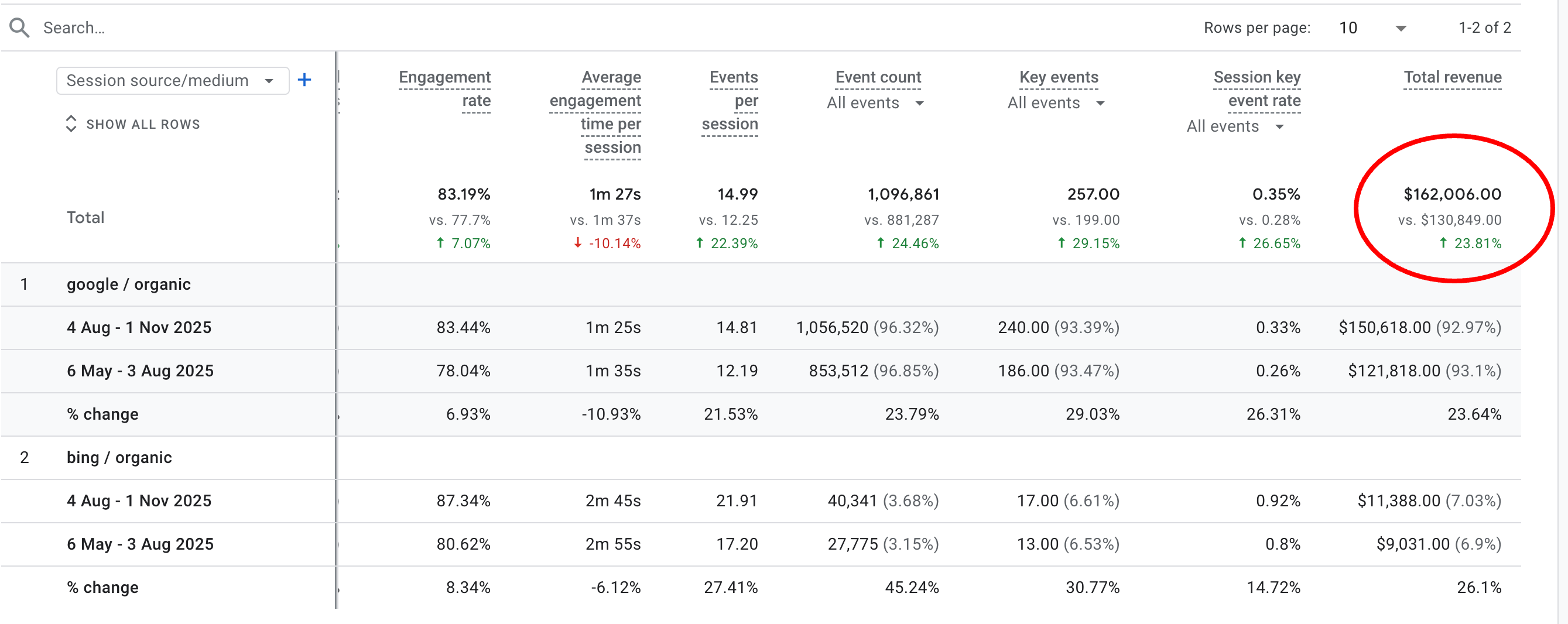
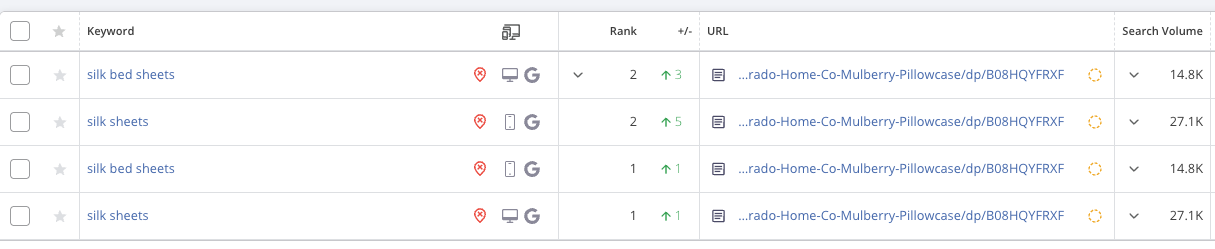
Revenue, organic sessions to commercial pages, conversion rate, and assisted conversions. Keyword rankings are a leading indicator we track, but the report we send each month leads with what actually moved the business. If organic revenue isn't growing, the rankings don't matter.
Why work with an Auckland-based e-commerce SEO agency?
Same timezone, NZ search behaviour fluency, knowledge of the Australasian competitive landscape, and direct accountability. We're not running a generic offshore playbook — we know which Aussie and Kiwi retailers are dominating the SERP for your category and exactly how they got there.
What makes Affilino different from other e-commerce SEO agencies in New Zealand?
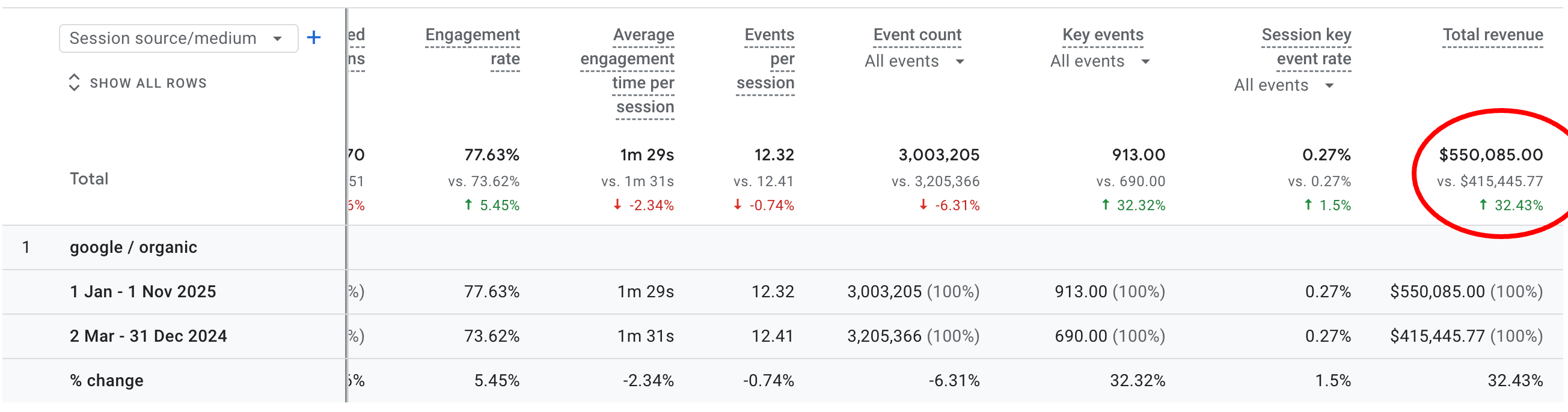
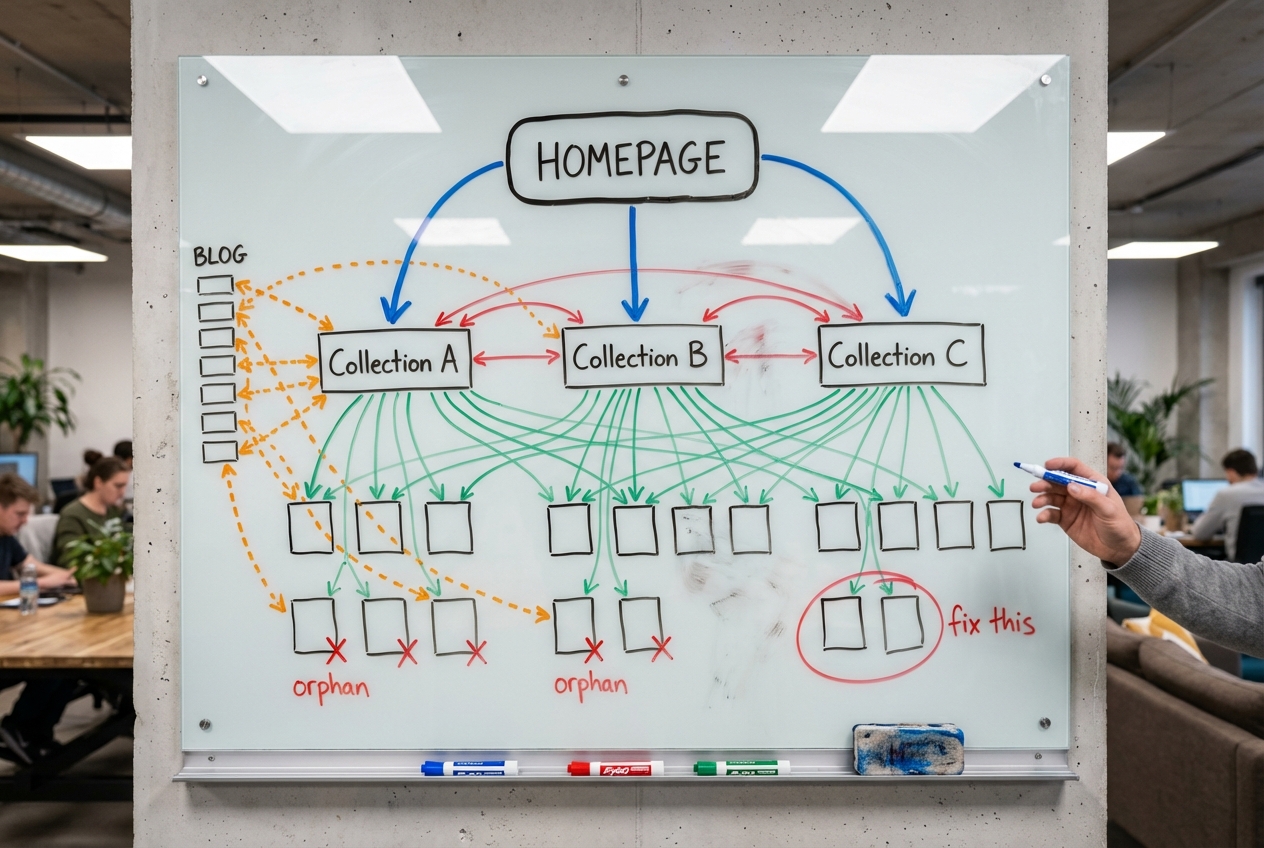
Most agencies cap deliverables — 20 keywords, 5 pages, 2 blog posts a month. We don't operate that way. We work the entire site as a system: architecture, schema, content, internal linking, page experience, and authority all in parallel. That's why our clients average 32%+ organic revenue growth instead of incremental keyword wins that don't move the P&L.